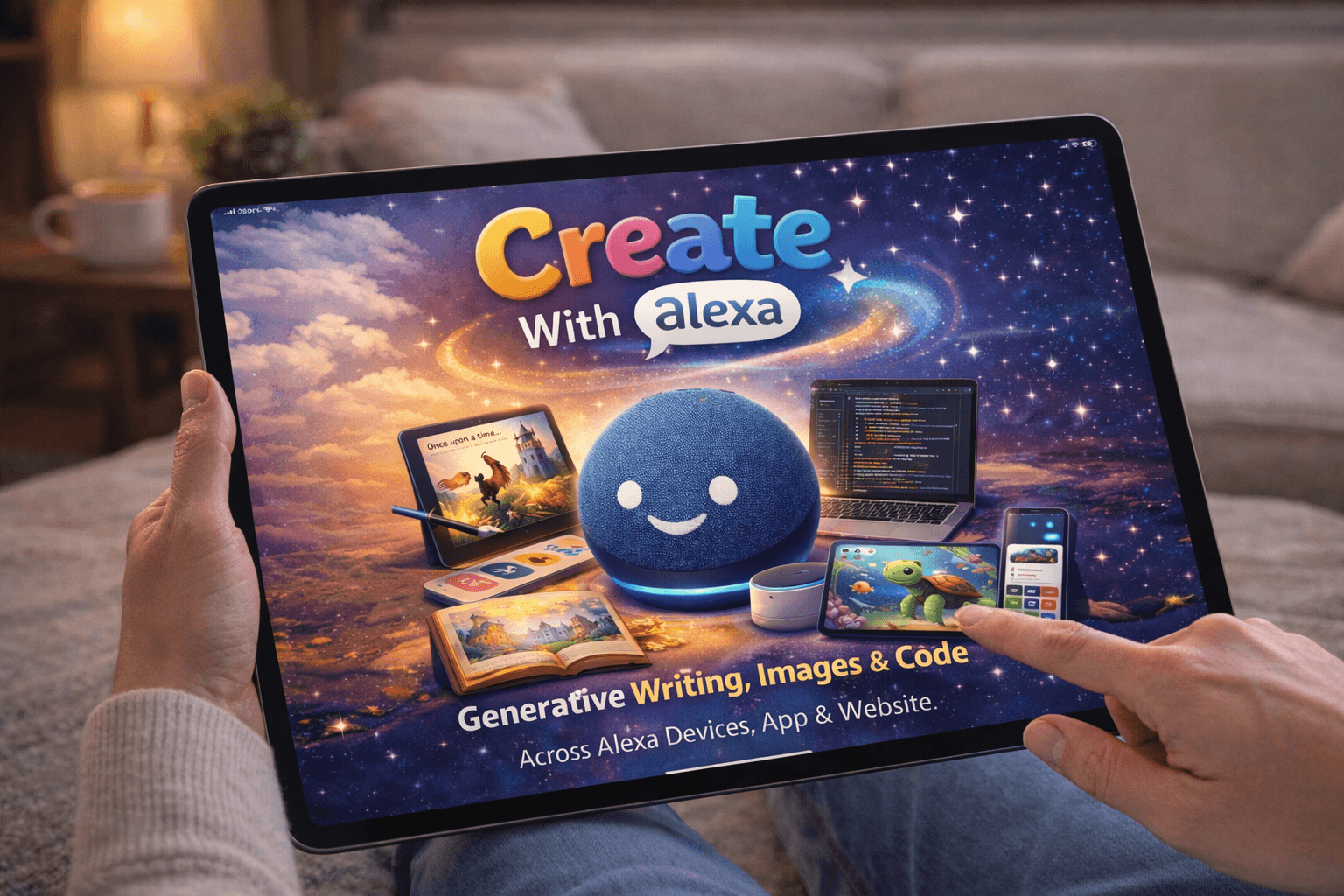
A cross-platform image and writing creation tool showcases the new, GenAI-powered Alexa and helps customers unlock value from day one.
Launch Year
2025
Platform
Mobile, web, multimodal
Role
Senior Product Designer
Problem
Alexa was widely perceived as a utility-first assistant built for tasks like timers, weather, and smart home controls, not creative expression. As generative AI capabilities advanced, there was an opportunity to reimagine Alexa as a creative partner, but no established interaction model existed for open-ended, multimodal creation on Echo Show devices. Users were unfamiliar with how to prompt, iterate, or refine AI-generated outputs, and early concepts risked feeling either intimidating or unpredictable. The challenge was to introduce powerful creative tools in a way that felt intuitive, trustworthy, and aligned with Alexa’s existing mental models while expanding what the platform could be.
Outcome
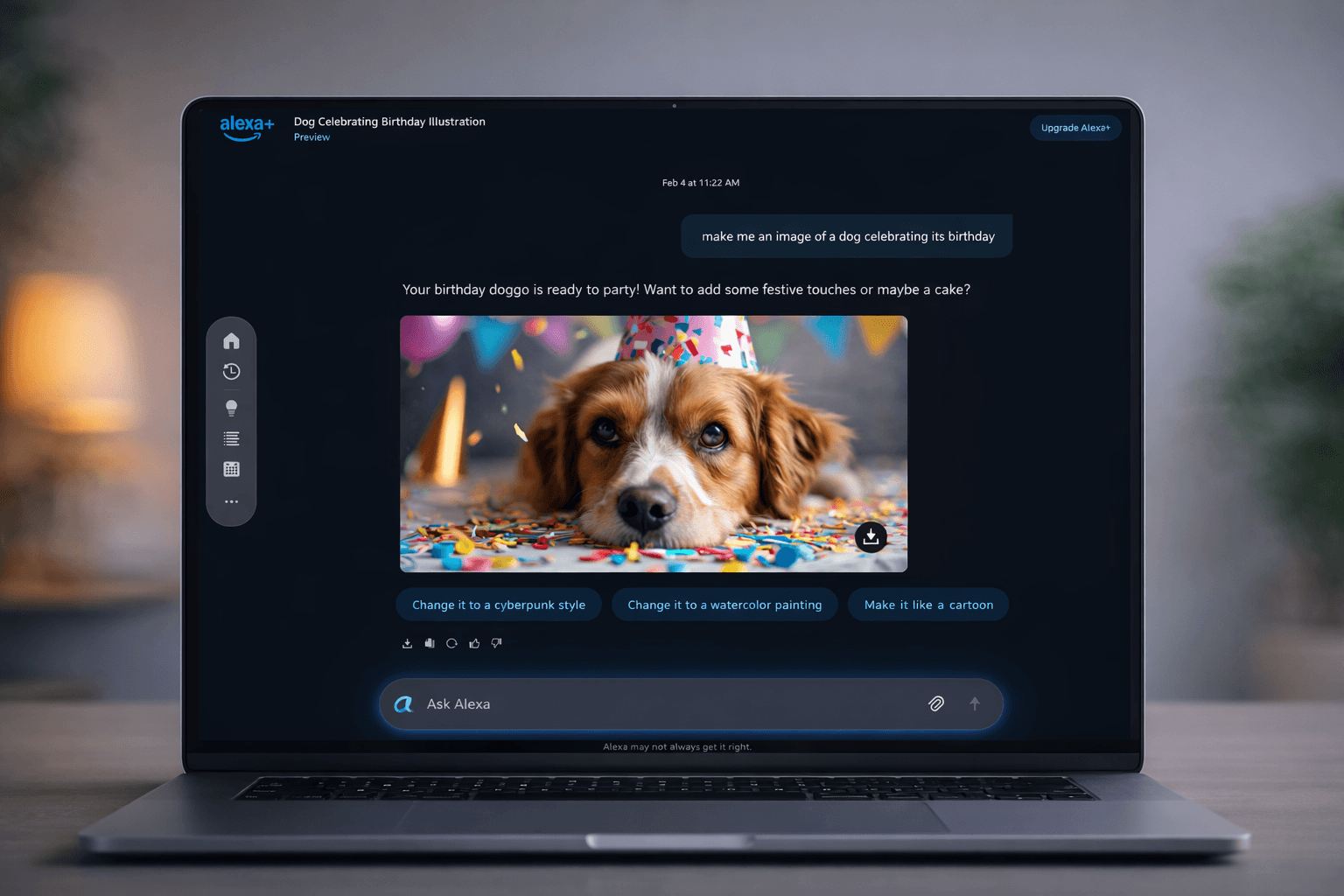
Create with Alexa transformed Alexa from a task-based assistant into a creative partner. By shipping a suite of AI-powered tools including image generation, photo editing, and conversational creation flows, we unlocked entirely new behaviors on Echo Show devices and increased engagement within visual surfaces.
The experience established foundational interaction patterns for multimodal AI across Alexa+, influenced adjacent teams adopting generative UX, and positioned Alexa as a more expressive, creation-forward platform rather than a purely utility-driven one. Beyond the feature set itself, the work shaped internal standards for designing safe and trustworthy generative experiences at scale.
My Role
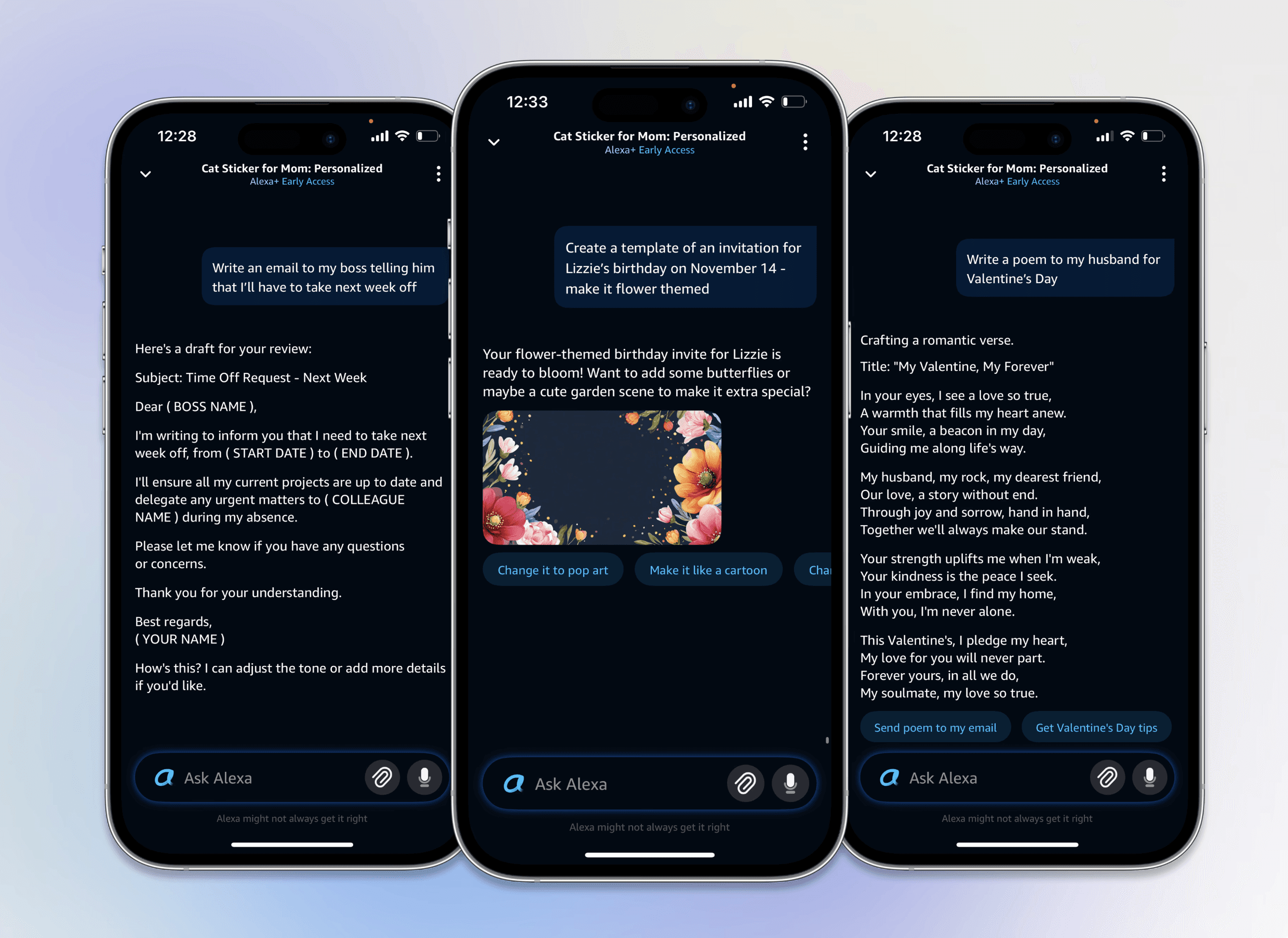
I was the UX Designer responsible for Create with Alexa, covering generative writing and image creation across Echo devices, the Alexa app, and the web. I owned how customers initiate creation, refine outputs through conversation, and build confidence in what Alexa produces.
Because this was Alexa’s first generative AI product, output quality and UX were tightly linked. A key part of my role was partnering closely with engineering and applied science to shape prompt instructions and refinement behaviors so writing outputs were clearer, more intentional, and easier to correct when they missed the mark. While I did not train models directly, my work focused on ensuring the experience reliably produced competitive results.
My Design Focus
Introducing generative AI in a way customers could trust
As Alexa’s first generative experience, trust and predictability mattered more than novelty. Qualitative research showed that while users were often satisfied with first drafts, frustration emerged when Alexa forgot context, misunderstood intent, or made assumptions during refinement.
I focused on making creative generation feel stable and steerable so customers felt confident using Alexa for writing tasks they would otherwise take to competing tools.
Making writing competitive through UX and prompt instruction
Preference testing highlighted a significant writing quality gap against competitors. This could not be solved through interface polish alone.
I worked with engineering to refine prompt instructions and system guidance so Alexa produced stronger first drafts and responded more reliably to modification requests across common use cases such as invitations, emails, poems, and short-form writing. This reduced incorrect assumptions in generated content and made iteration feel more controllable, which research identified as a major pain point.
Designing iteration as the core creative loop
Customer behavior showed that creation is inherently iterative. Rather than treating refinement as an edge case, I designed Create with Alexa around iteration as the default flow, enabling customers to shape outputs step by step instead of restarting or abandoning their work.
How this work affects my design approach
Create with Alexa shifted how I think about designing for open-ended creation. I learned that when users are given powerful generative tools, the real design challenge is reducing intimidation while preserving possibility. This work pushed me to design systems that scaffold creativity through progressive disclosure, clear affordances, and strong feedback loops. It reinforced that multimodal AI should feel collaborative rather than reactive, and that thoughtful guardrails, transparency, and visual clarity are essential to making generative experiences feel safe, empowering, and genuinely usable at scale.