A conversational AI experience that modernizes how fans discover games, players, and history, giving Major League Baseball fans instant, personalized access to live data, archives, and predictions across mobile and web.
Launch Year
2024
Platform
Mobile, web
Role
Senior Product Designer

Problem
Major League Baseball had a rich archive of statistics, editorial content, and live game data, but fan experiences were largely static and navigation-heavy. As generative AI emerged, MLB saw an opportunity to modernize its digital ecosystem, yet there was no clear precedent for how conversational AI could responsibly surface real-time sports data at scale. The challenge was to design an AI experience that felt dynamic and personalized without compromising accuracy, brand integrity, or user trust. We needed to transform complex datasets into intuitive, conversational insights while ensuring fans still felt grounded in official, reliable information.
Outcome
The MLB AI Assistant marked Major League Baseball’s first meaningful step into generative AI, transforming static stats and editorial content into dynamic, conversational experiences for fans. We launched a beta experience that modernized MLB’s digital presence, increased fan engagement during live games, and provided personalized insights that traditional navigation could not surface. Beyond the feature itself, the project established a scalable conversational design system and governance framework that enabled future AI-driven initiatives across MLB’s platform.
My Role
I was the Lead UX/Product Designer on the MLB AI Chat Assistant, working alongside one additional UX designer and a creative director over an eight-month engagement.
I owned the experience end to end, from early product definition through interaction design, modular UI systems, and usability validation. Because the assistant relied on real-time data, historical archives, and predictive content, my role extended beyond interface design into defining how AI responses should surface, structure, and transition between conversational and visual states.
A critical part of my role was ensuring conversational flexibility did not undermine clarity, accessibility, or trust—especially when adapting established MLB UX patterns into a chat-first paradigm.
My Design Focus
Making conversational discovery feel trustworthy
This product could not succeed as a novelty chatbot. Research showed that fans were open to conversational exploration, but only if answers felt authoritative and grounded in MLB’s data ecosystem.
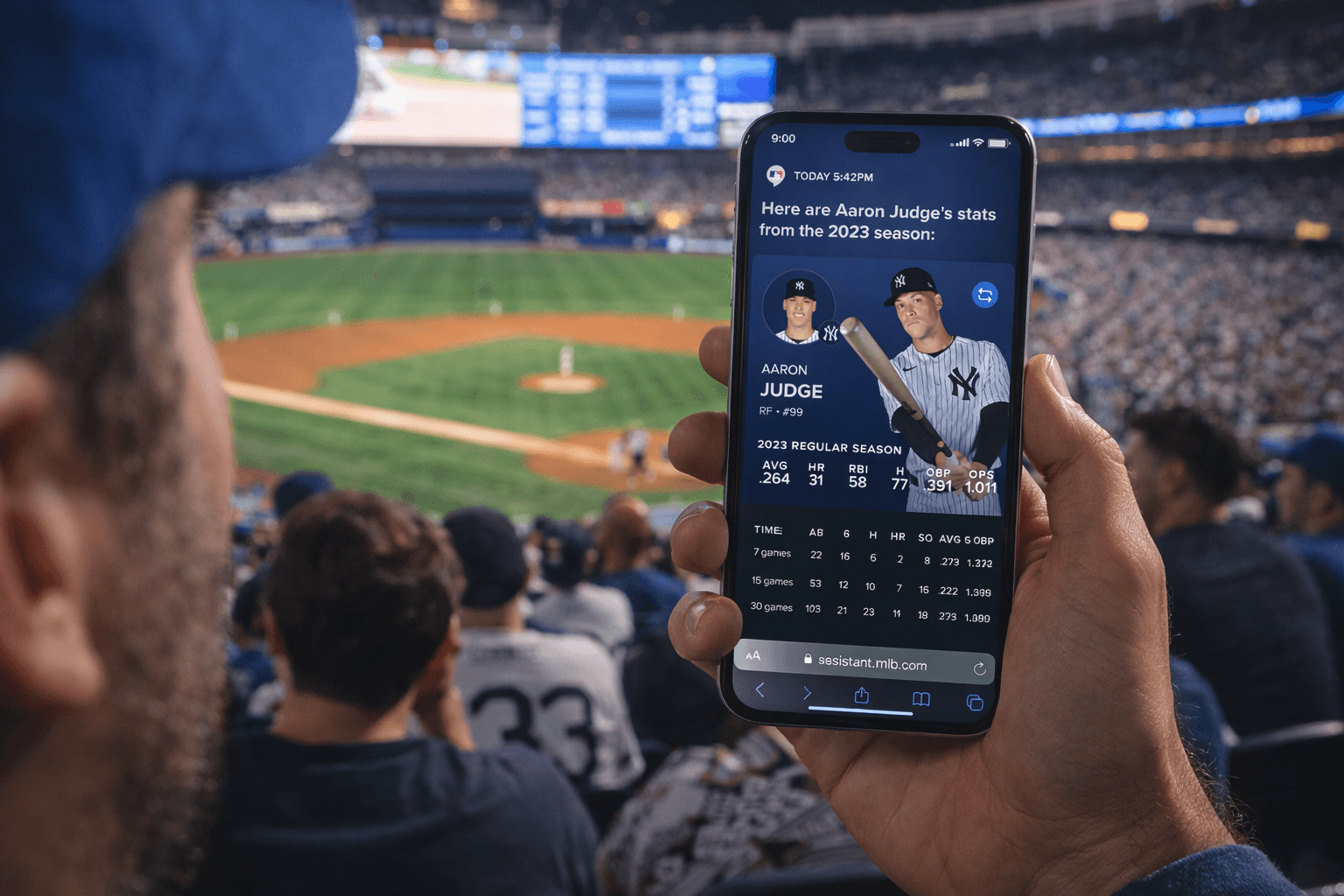
I focused on pairing conversational responses with structured UI modules that reinforced credibility—clearly communicating what was live data, historical context, or predictive insight. By anchoring AI responses in recognizable MLB formats, the assistant felt additive rather than disruptive to existing fan workflows.
Designing flexible paths without losing context
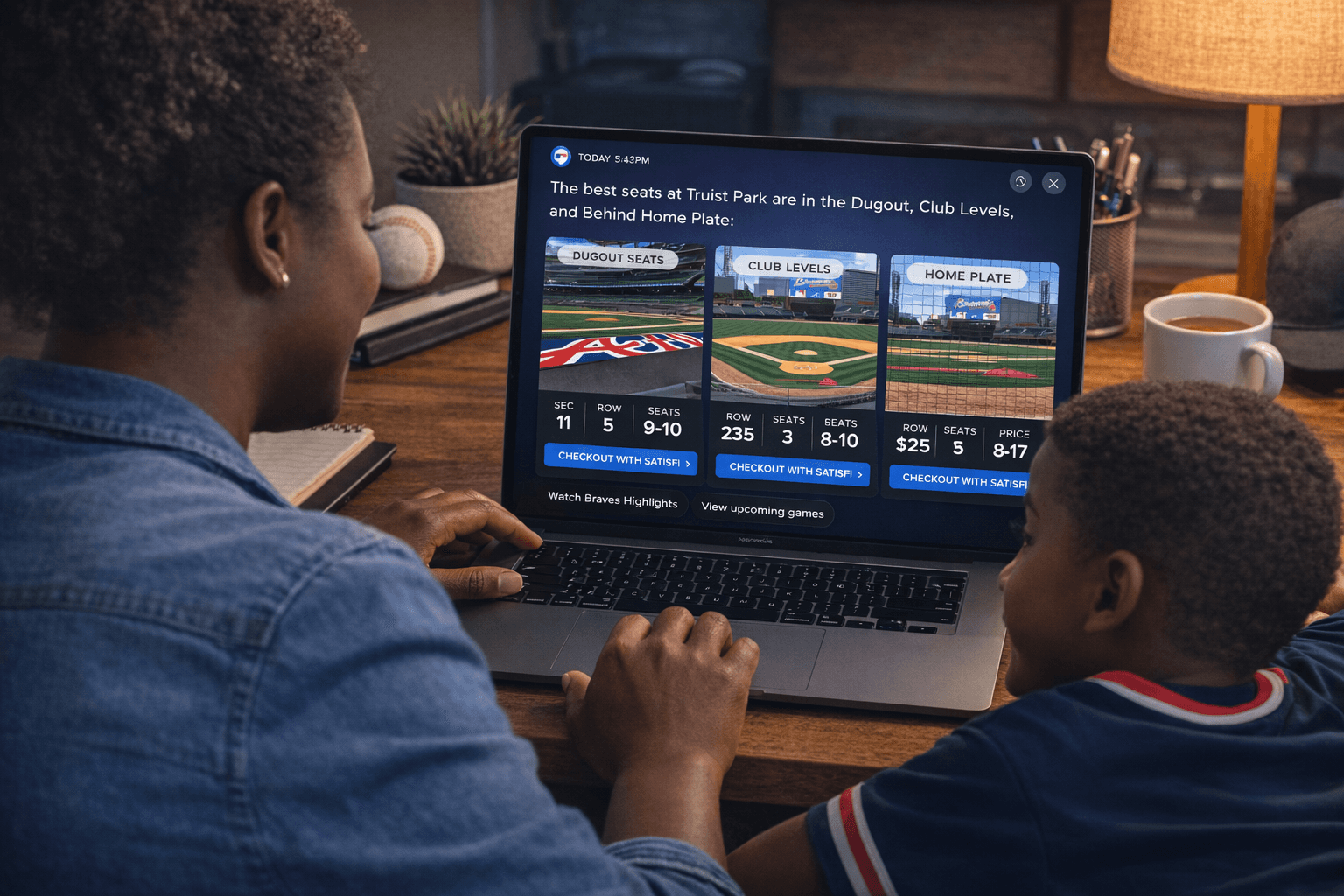
Fan behavior was highly nonlinear. A single session often jumped from game times to player stories, probable pitchers, ticket purchasing, and back to live scores.
I designed the experience to support branching by default, allowing fans to explore multiple directions without dead ends while preserving conversational history and continuity. This made exploration feel fluid rather than transactional and encouraged longer, more engaged sessions.
Scaling personalization across teams, players, and eras
One of the most complex problems was designing for scale: 30 teams, decades of history, and over 20,000 active and retired players.
Through story mapping and iterative testing, we moved from rigid templates to a flexible system that dynamically adapts team branding, stats, and layout based on player type and historical relevance. This allowed each interaction to feel tailored while remaining consistent, performant, and maintainable.
Designing iteration into the core experience
Fans rarely ask one question and leave. Exploration naturally unfolds through follow-ups.
Rather than treating follow-up questions as edge cases, I designed iteration as the default loop—allowing users to move seamlessly from high-level questions into deeper detail without restarting or recontextualizing. This reinforced the assistant as a discovery tool rather than a simple Q&A interface.
How this work affects my design approach
Designing the MLB AI Assistant fundamentally changed how I think about introducing emerging technology into legacy ecosystems. It reinforced that trust must precede delight, especially when users are engaging with AI for the first time. I learned to anchor generative possibilities in familiar mental models, use constraints as a design tool rather than a limitation, and prioritize clarity over novelty. The project deepened my conviction that AI experiences succeed not because they are technically impressive, but because they feel predictable, useful, and grounded in real user intent.